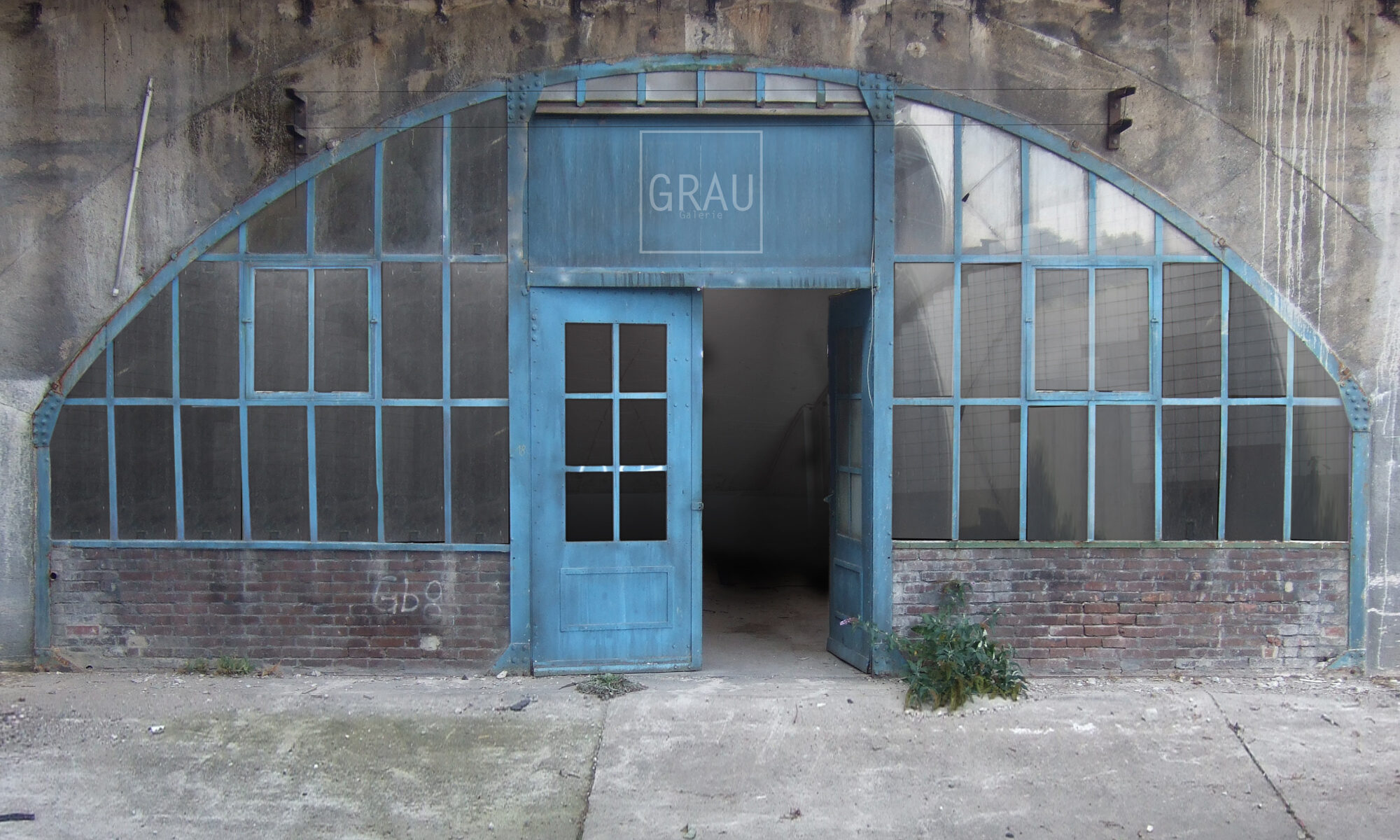

Der Bunker als militärisches Typenbauwerk des 20. Jahrhunderts wird im kunsthistorischen und architekturtheoretischen Diskurs längst nicht mehr allein als Defensivarchitektur rezipiert. Losgelöst von seiner ursächlichen Funktion als Instrument der Kriegsführung und Ideologie offenbart er bei einer formal-ästhetischen Analyse eine bemerkenswerte Verwandtschaft zu den zentralen Fragestellungen der modernen Plastik und Bildhauerei.
Die plastische Disposition: Negativraum und Masse
Aus bildhauerischer Perspektive ist der Bunker primär eines: eine kompromisslose Ausformulierung von Masse, Volumengehalt und Hohlraum. Wo die klassische Architektur Räume durch das Zusammenfügen einzelner Wände definiert, entsteht der Bunker monolithisch. Er wird im Prinzip wie eine autonome, gegossene Plastik begriffen – ein stereotomer Körper aus Stahlbeton, der sich der traditionellen Tektonik von Säule, Gebälk und Wand entzieht. In der Sprache der plastischen Kunst lässt sich dieser Bautypus als ein Wechselspiel von Positiv- und Negativform lesen:
- Der äußere Betonkörper (Positivform): Ein massiver, blockhafter Kubus, der dem Außenraum trotzt und keine ornamentale Repräsentation kennt. Die Facettierung der Oberflächen, oft bestimmt durch die Schalungsstrukturen der Schalbretter oder die Roheit des Rohbetons, antizipiert formalästhetisch Aspekte des Brutalismus sowie der Minimal Art.
Der innere Nutzwandungsraum (Negativform): Das Innere wird nicht erbaut, sondern gleichsam aus der Betonmasse herausgeschnitten. Es handelt sich um ein negatives Volumen – eine im Gussverfahren erzeugte Aussparung im Festkörper, deren Dimensionen ausschließlich durch minimale funktionale Anthropometrie bestimmt sind.
 Abbildung „Bunker“, 40cmx40cm, 2026 Johannes Gramm
The bunker, as a typical military structure of the 20th century, has long since ceased to be viewed solely as defensive architecture in art-historical and architectural-theoretical discourse. When analysed from a formal and aesthetic perspective, and detached from its original function as an instrument of warfare and ideology, it reveals a remarkable affinity with the central concerns of modern sculpture.
The sculptural composition: negative space and mass
From a sculptural perspective, the bunker is primarily one thing: an uncompromising articulation of mass, volume and void. Whereas classical architecture defines spaces by joining individual walls, the bunker emerges as a monolithic structure. In principle, it is conceived as an autonomous, cast sculpture – a stereotomic body of reinforced concrete that eludes the traditional tectonics of columns, beams and walls. In the language of sculptural art, this building type can be interpreted as an interplay between positive and negative forms:
- The outer concrete structure (positive mould): a solid, block-like cube that defies the external space and is devoid of any ornamental features. The faceted surfaces, often determined by the formwork patterns of the formwork boards or the rough texture of the exposed concrete, foreshadow, in terms of formal aesthetics, aspects of Brutalism and Minimal Art.
- The interior space of the load-bearing wall (negative mould): The interior is not constructed, but is, as it were, cut out of the concrete mass. It is a negative volume – a recess in the solid created by the casting process, the dimensions of which are determined solely by minimal functional anthropometry.