Spuren von Zeit und Raum: Das Zeichnerische als historische Topografie in den Arbeiten Alwin Titzraths
Die Zeichnung gilt als unmittelbarstes Medium künstlerischen Denkens. In ihrer scheinbaren Fragilität – aufgetragen als dünner Graphitstrich, tuschegetränkte Spur oder präziser Umriss – entfaltet sie ein überraschendes Potenzial, Raum und Geschichte zu verhandeln. Diese Ausstellung widmet sich der Zeichnung nicht nur als autonomen Kunstwerk, sondern als seismografischem Instrument, das historische Gegebenheiten und räumliche Dimensionen kartografiert.
Im Fokus steht die Frage, wie das Zeichnerische Raum konstituiert. Um eine historische Begebenheiten abzubilden, greifen die Arbeiten auf fragile Linien und Schichtungen zurück, um Architektur, Landschaften und urbanes Gedächtnis physisch spürbar zu machen. Der Strich wird zum Vektor der Erinnerung: Er hält vergängliche Zustände fest, legt archäologische Schichten offen und verbindet vergangene Epochen mit der Gegenwart. Die präsentierten Positionen zeigen, dass Zeichnen ein Akt des Befragens ist. Sie machen Raum und Geschichte nicht als statische Kulissen erfahrbar, sondern als fluide Prozesse, die im Medium der Linie kontinuierlich neu vermessen und inszeniert werden.
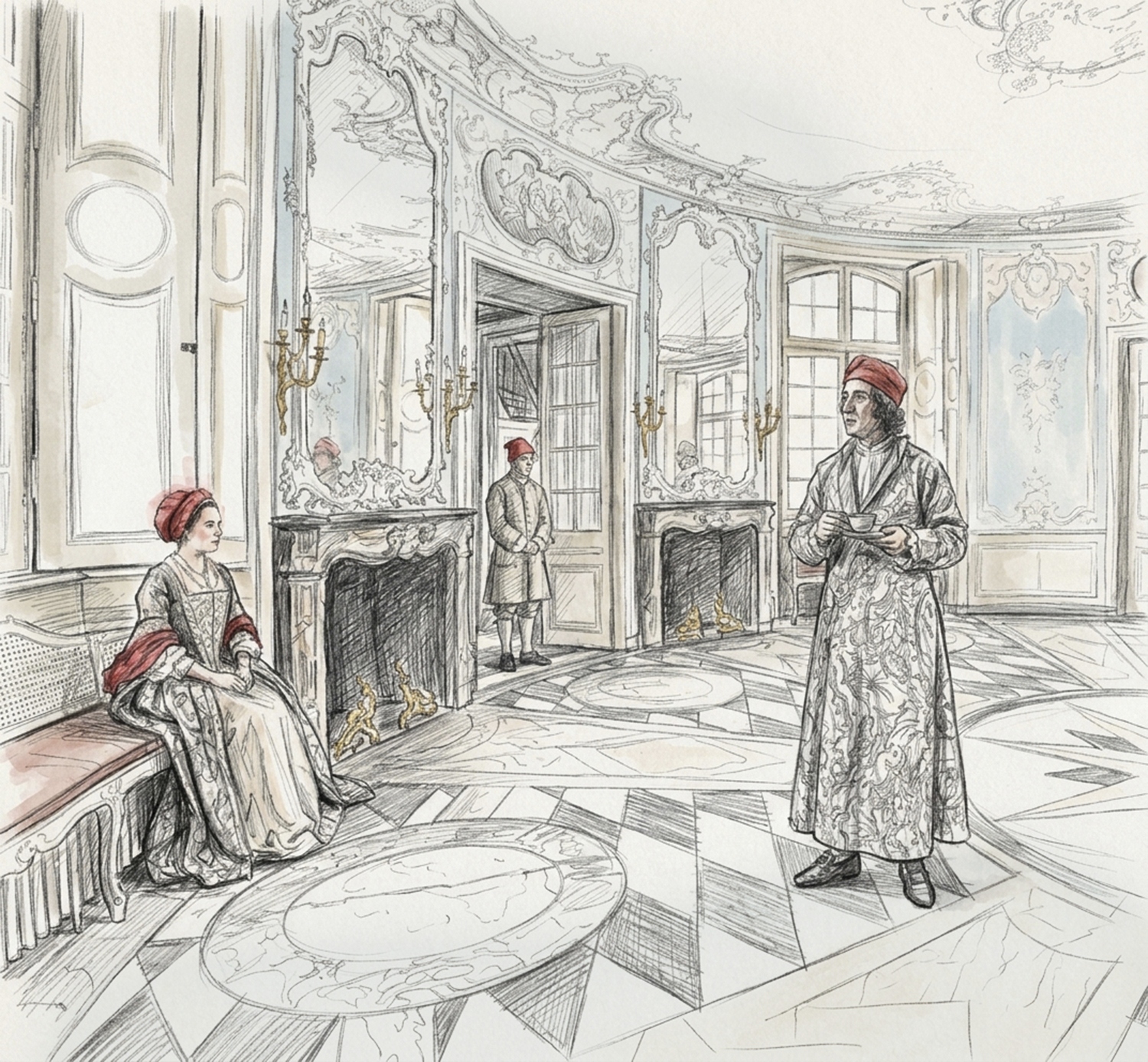
Traces of Time and Space: Drawing as Historical Topography in Alwin Titzrath’s pictures
Drawing is widely regarded as the most direct medium of artistic thought. In its apparent fragility—applied as a thin graphite line, an ink-soaked trace, or a precise contour—it unfolds a surprising capacity to negotiate space and history. This exhibition explores drawing not merely as an autonomous artwork, but as a seismographic instrument that maps historical conditions and spatial dimensions.
At the core is the question of how the act of drawing constitutes space. Rendering historical events employ fragile lines and layering to make architecture, landscapes, and urban memory physically tangible. The stroke becomes a vector of memory: capturing ephemeral states, revealing archaeological layers, and bridging bygone eras with the present. The featured artistic positions demonstrate that drawing is an act of inquiry. They render space and history experienceable not as static backdrops, but as fluid processes that are continually re-measured and staged through the medium of the line.